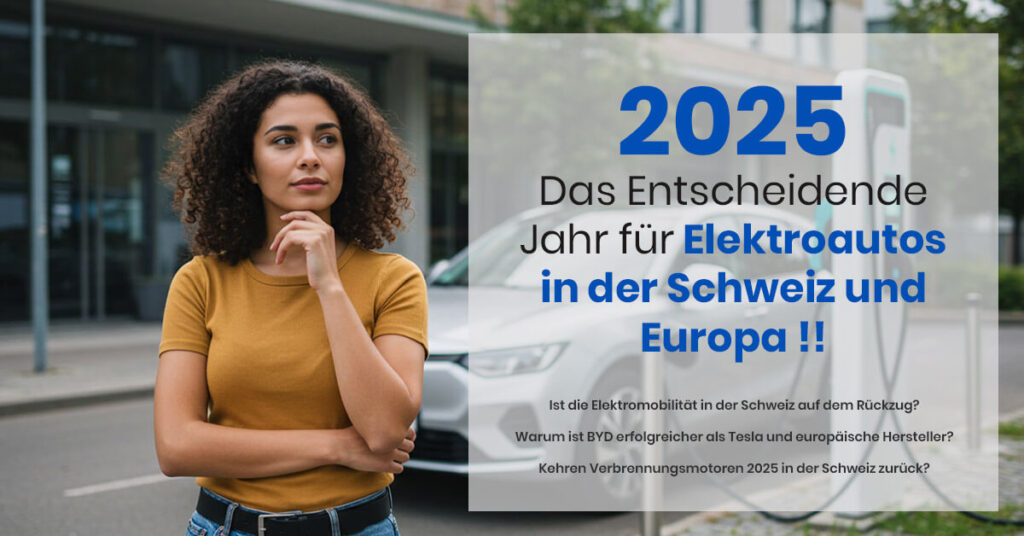
Electric cars in Switzerland will experience a turning point in 2025 as the market is now... BYD, a Chinese manufacturer, is dominated. BYD is outperforming competitors, including Tesla, with its electric vehicles. BYD's rise could undermine European manufacturers' ambitions to make their electric vehicles the norm.
But does Europe still have a chance to prevail against this competition, and what measures have been taken in 2025? This article examines the current dynamics of the market and what this means for Switzerland and the future of the automotive industry in Europe.
BYD: The new market leader in electric cars in Switzerland
Since 2024, BYD (Build Your Dreams), the Chinese automobile manufacturer, has achieved another milestone. With exceptional growth of 4.27 million vehicles sold, BYD has overtaken Tesla in sales volume and consolidated its position as a global market leader. Here's why the Chinese manufacturer is succeeding where Tesla and other European manufacturers struggle:
- Affordable prices: BYD's vehicles are offered at highly competitive prices while incorporating cutting-edge technology, making electric mobility accessible to a wide audience.
- Range and fast charging: The BYD vehicles feature an improved range of up to 750 km for some models and offer an ultra-fast charging system that allows charging in less than 5 minutes.
- Versatile models: From small city cars to SUVs, BYD offers models for all types of consumers, with modern features and standard features, unlike Tesla, which charges additionally for certain options.
With its presence in Europe (especially in Switzerland), BYD is well on its way to revolutionizing the market and making European vehicles difficult to compete with. In 2025, the brand will open 15 new points of sale in Switzerland, underlining its commitment to the Swiss market.
Electric cars in Switzerland 2025: BYD overtakes Tesla and Europe hesitates
European ambitions to make locally produced electric vehicles – particularly electric cars in Switzerland – global leaders are under serious scrutiny. Despite significant efforts such as electric car subsidies and local battery development, Europe is finding it difficult to withstand the Chinese onslaught, particularly from BYD.
- Tesla: Although Tesla remains a major player, its global leadership is increasingly being challenged by Chinese brands. In Europe, Tesla's market share has fallen noticeably as BYD models, which are cheaper and just as powerful, appeal to more and more buyers. The Tesla Model 3 has long been a bestseller, but more and more European consumers are tending to prefer cheaper alternatives from BYD.
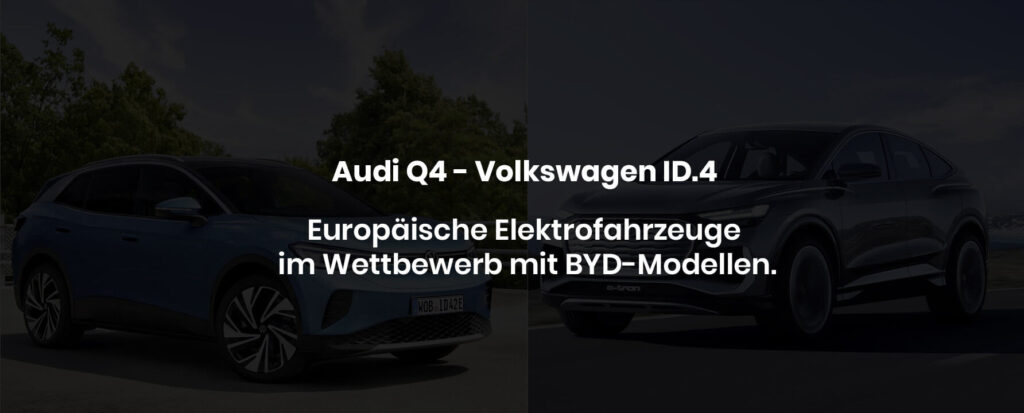
- European manufacturers: Brands like Volkswagen, BMW and Audi are trying to compete with models like the Volkswagen ID.4 or Audi Q4 e-tron, but their electric vehicles aren't attracting buyers as effectively as the Chinese models. The high price of European electric vehicles and the often shorter range compared to BYD models are deterrent factors.
Europe, which originally relied on Tesla to drive the electric revolution, is now in a difficult position as players like BYD offer powerful, cost-effective alternatives.
A comeback of combustion engines: A failure of electromobility in Switzerland?
An unexpected consequence of BYD's increasing dominance and the relative failure of European manufacturers is the return of internal combustion engine vehicles (petrol and diesel) in Switzerland. In 2024, electric car sales in Switzerland fell to 19.3% of new registrations, down from 20.9% in 2023. This decline suggests that the Swiss market, once enthusiastic about electric mobility, may return to traditional solutions.
- Lack of infrastructure: Although Switzerland is investing in the expansion of charging points, the network remains inadequate to support the widespread adoption of electric vehicles. Consumers, especially outside major cities, are reluctant to switch to electric cars without reliable and fast charging infrastructure.
- Price of electric cars: Electric vehicle prices remain high compared to internal combustion engine vehicles, even for brands like Tesla or BMW, prompting many consumers to turn to cheaper gasoline vehicles.
- Sustainability and reliability: With gasoline and diesel vehicles becoming increasingly economical and reliable, consumers may be hesitant to invest in electric vehicles, particularly due to rapid battery depreciation and perceived high maintenance costs.
This return to internal combustion engines could be seen as a failure for the transition to sustainable mobility in Switzerland, reinforced by the rise of Chinese models such as those from BYD that offer cost-effective alternatives.
The lack of a European response to the Chinese challenge
Electric cars in Switzerland will experience a fundamental change in 2025 - but not in favor of European manufacturers. Europe's lack of a decisive response to the Chinese challenge is a growing problem. While BYD impresses with competitive prices, strong performance and modern technology, European brands such as Volkswagen and Renault are lagging behind despite new models such as the ID.3 or Mégane E-Tech.
Europe seems to have underestimated the speed with which BYD has become established in Europe, particularly in Switzerland. Tax incentives and other support measures cannot reverse the trend.
An uncertain future for electric cars in Switzerland and Europe
Despite efforts to encourage the switch to electric cars, the electric vehicle market in Europe and Switzerland appears to be losing momentum in 2025. The return of vehicles with combustion engines and the rise of Chinese manufacturers such as BYD are making the ambitions of European manufacturers increasingly questionable. Even though Europe is trying to establish electric vehicles on the market, the economic and technological reality shows that consumers are turning back to traditional solutions as petrol and diesel vehicles become increasingly efficient.
This decline could mean the end of Europe's ambitions to dominate the electric car sector. Ultimately, BYD could take the lead in the automotive market, including in Europe, and the European ambition to highlight electric cars could run into the reality of the market.
2025: The moment to sell your electric car – SwissCarMarket can help!
For everyone who closely follows the development of the electric car market in Switzerland and already owns an electric vehicle, uncertainty is growing.
Doubts about the future of electromobility and the attractiveness of classic drives such as diesel or gasoline are causing many to think about changing vehicles.
If you want to sell your electric car or switch to a proven vehicle with a combustion engine SwissCarMarket the ideal platform. Fast, uncomplicated and transparent – here you will find reputable offers for buying and selling vehicles throughout Switzerland.